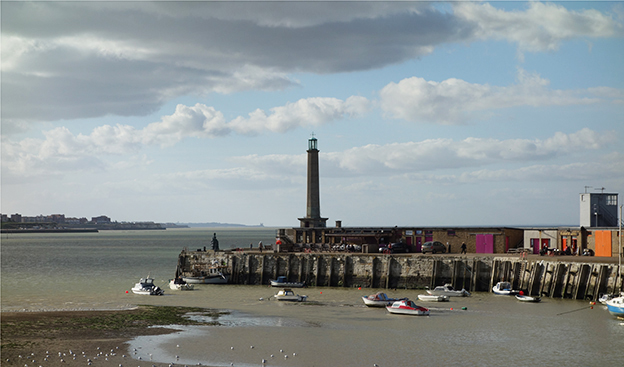
One fine day in February. The blip on the horizon to the left of the lighthouse is an 800-year-old navigation mark – the twin church towers on the cliff at Reculver. The church itself has gone.
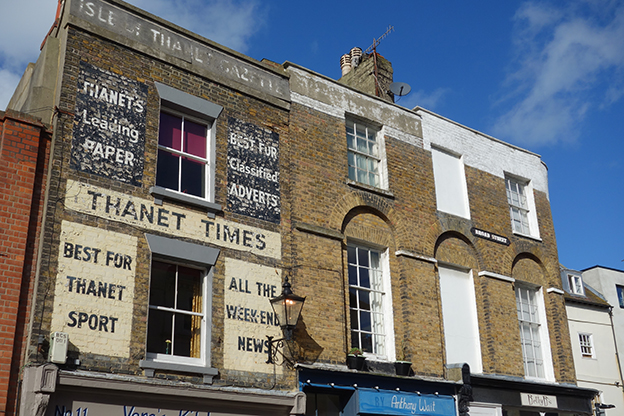
Ghost of a newspaper: the Thanet Times is no more (also known as the Thanet Crimes).
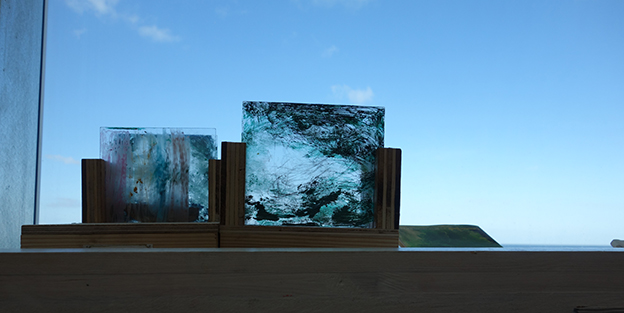
And the ghost of Turner makes an appearance in the workshop space at Turner Contemporary. At the moment he’s rubbing shoulders with Helen Frankenthaler in the gallery.
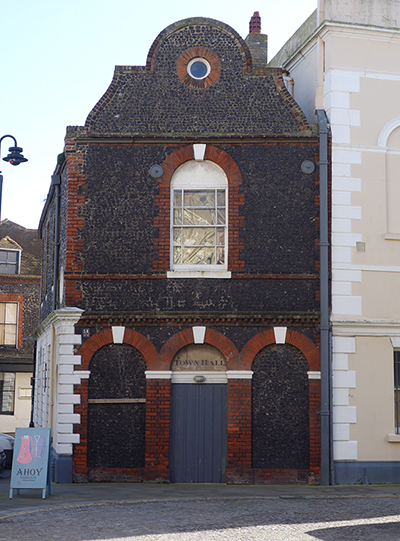
Richard Watts, the 17th-century notary at Deal who co-starred in an earlier post, probably saw this three-arched building go up in Margate where he formerly lived; the ground floor looks as if it was once an open arcade. Now it’s part of Margate’s excellent museum.
As for the gifts of Margate ale that Watts would send up to Whitehall whenever he feared a loss of favour there, it could have come from the brewhouse that had stood in Mansion Street since 1615 at least, or from another located up on the Fort cliffs where Cobb’s brewery was later built. It’s been suggested that there could have been maltings in the caves under the cliffs from a very early date – see the link below. The antiquary John Lewis wrote in 1723 that there were formerly about 40 malthouses in the parish.
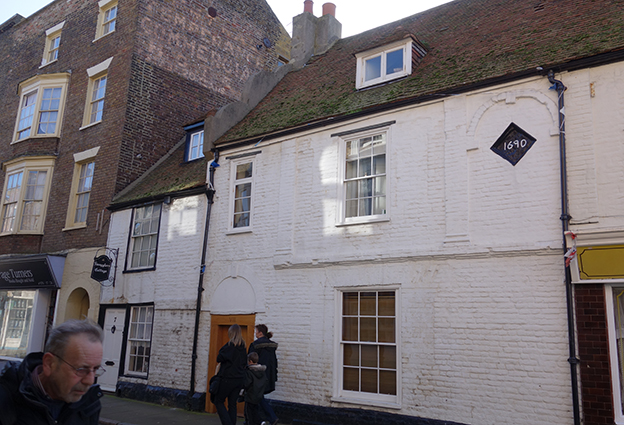
This is Lombard Street – probably where pawnbrokers operated in the 1600s.
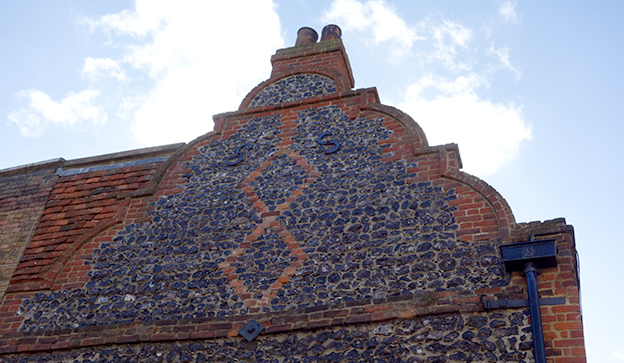
A love of Flemish gables apparently arrived with returning royalist exiles after 1660.
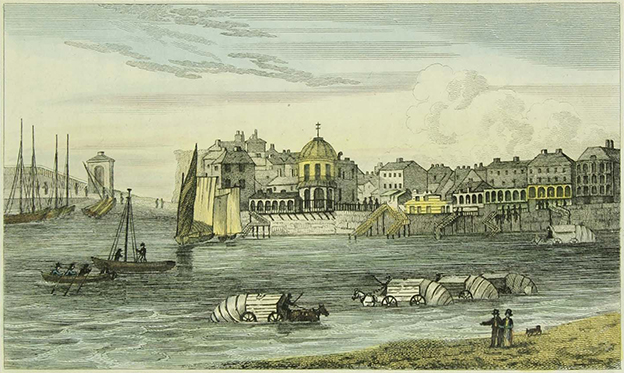
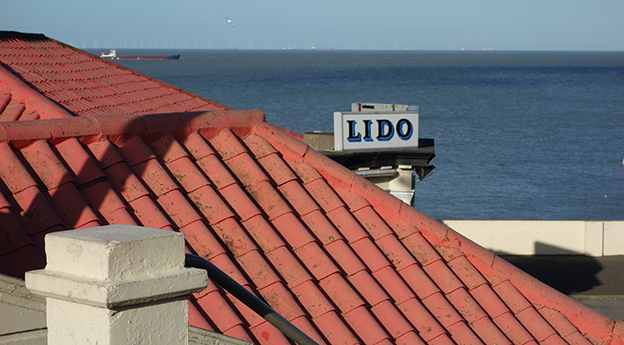
Sea-bathing was invented in the 1700s: back then it involved nakedness, burly attendants and horse-drawn bathing machines. Later there was a sea-bathing infirmary, and the Clifton Baths were built into the cliffs. Then came the Lido – now up for redevelopment, but an action group is on the case.
Links
- Anthony Lee’s Margate local history site has a vast collection of prints and maps of Margate, including A Picture of Margate, and its Vicinity by W. C. Oulton: http://margatelocalhistory.co.uk
- On maltings in caves: http://www.margatecaves.co.uk/comment/20
 Things turned up