Category Archives: printing

Paddling in the Thames

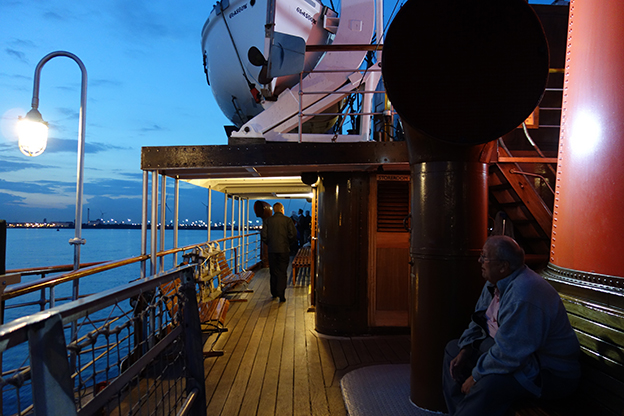
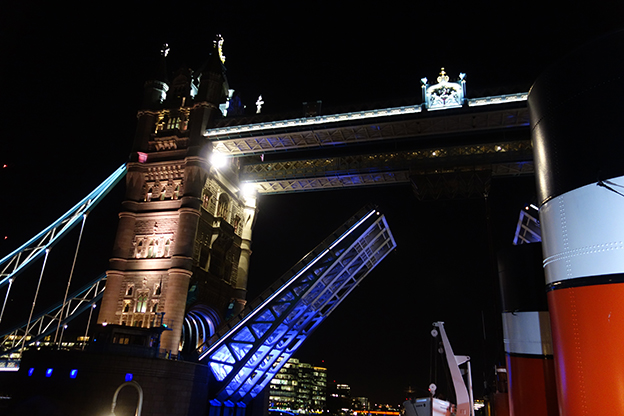
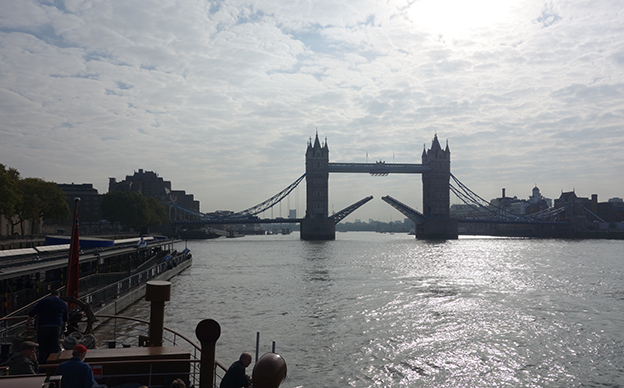
Here is the Clyde paddle steamer Waverley leaving Tower pier for an excursion to Southend last week, and owning the river.
TowerBridge_am

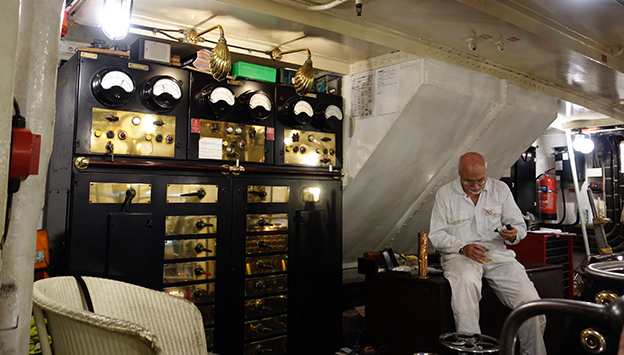
Waverley is the last of the world’s sea-going paddle steamers, completed in 1947 and now restored to full post-war self-confidence, with further improvements including classlessness. The ship has two bars, a dining saloon and a tea room, Lloyd Loom chairs, oilcloth on the tables, a very public engine room, a saltire on the mast – and a surprising turn of speed.
barrier
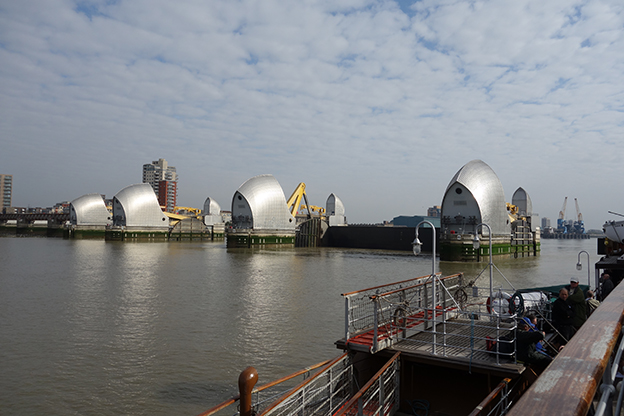
At the Thames flood barrier
LondonGateway
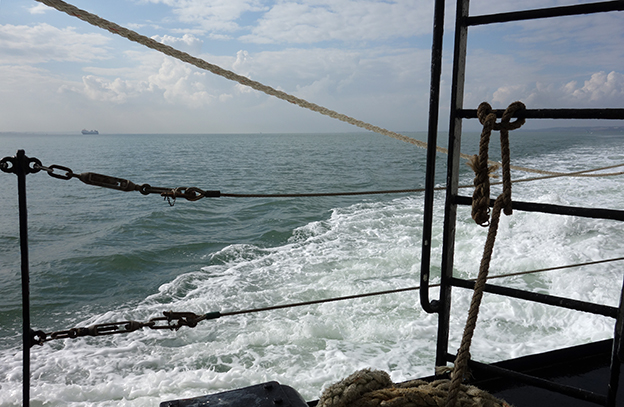
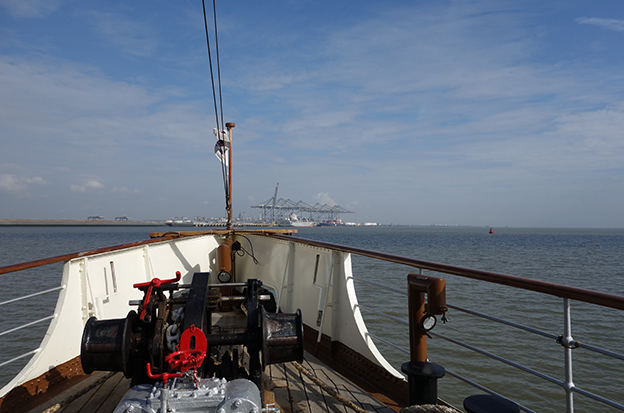
Steam windlass on the deck, container terminal on the horizon
Southend
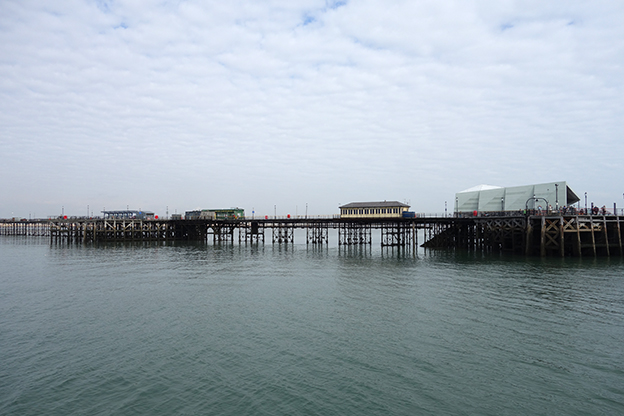
The approach to Southend pier
engineer
The engine room
wake
Gravesend
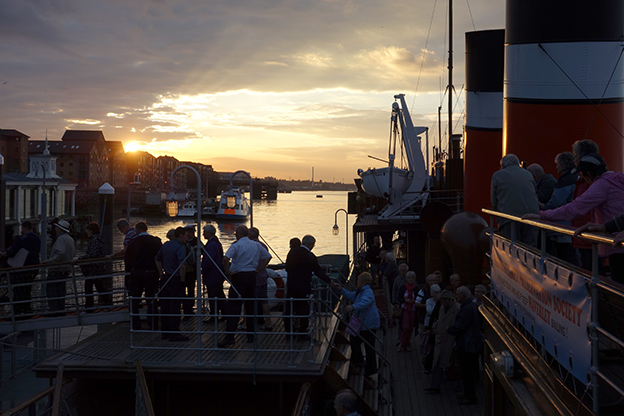
Disembarkation at Gravesend
deck
TowerBridge_pm

An earlier Waverley was built in 1899 for the North British Railway company, the owners of Waverley station in Edinburgh. That history may have prompted someone to use an Edwardian display typeface (Pretorian) as a lettering style for the present Waverley, which appears on publicity material and even on the sterns of the lifeboats. Perhaps the designer was just thinking about waves; but the typeface, which reappeared in the age of Letraset as an emblem of 1970s taste, grates now when seen against the careful restoration of this 1940s vessel. Who knows what Sir Walter Scott would make of it, who took the name from an ancient place in Surrey and made it famous. Romance is one thing, ham-gothic twiddles are something else altogether.
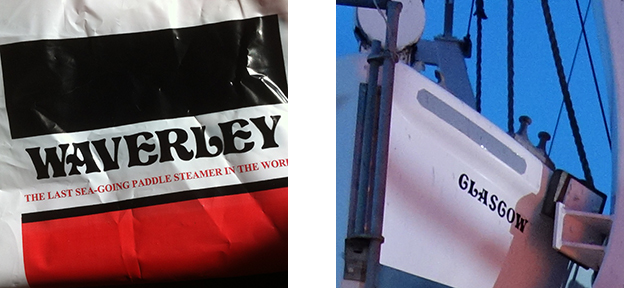
Pretorian_comp

As it happens, the North British Railway company’s designers took a less fanciful approach to lettering, in a badge that was embedded in the floor of the booking hall at Waverley station.
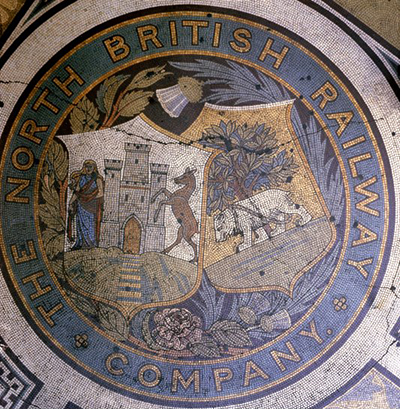
NBR badge
[photo: RCAHMS]
paddlebox

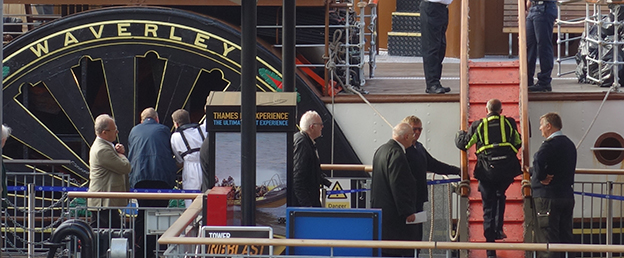
If that has too much of the North-British about it to consider as a model, an alternative might be the plain lettering tradition maintained on Waverley’s paddle boxes. Finally, as nearly all the preceding pictures were taken on board, here is the missing view of the vessel from the shore. The two red funnels (in 1947 there was a double-ended boiler) add up to a bit of Caledonian wit: beat that, Queen Elizabeth.

Waverley on the Clyde [photo: Paddle Steamer Preservation Society]

Rationalist Noah

Noah
Noah's Ark

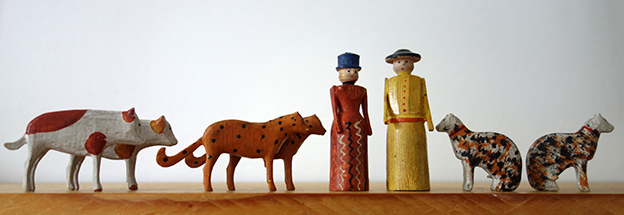
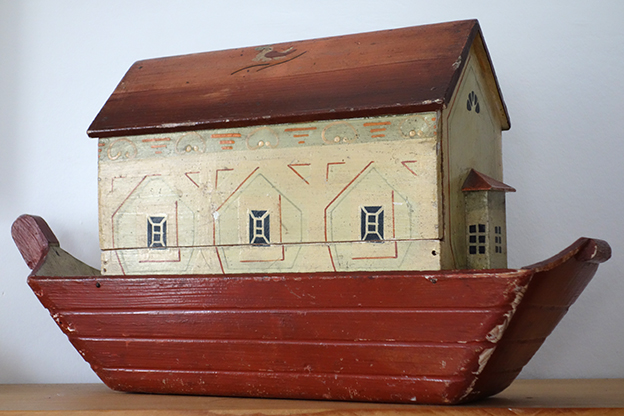
This ark, containing Noah, his wife and an extensive stock of animals, was probably made in Germany in the 19th century.

The Story of Noah 1

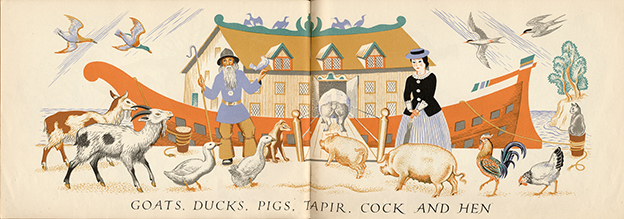
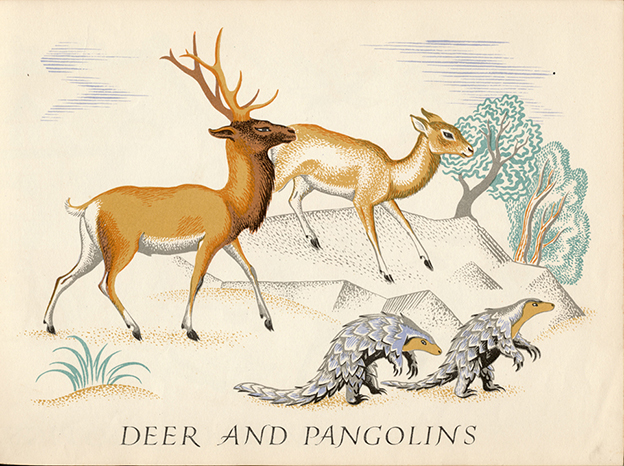
Here they are again in a 1949 edition of The Story of Noah by Clifford Webb, first published in 1931. In his lithographic illustrations, the pair and their ark have a family resemblance to the German toys, but the animals come from somewhere else – a printmaker’s eye for the shapes of living things. Tapirs and Pangolins! You might also suspect a liking for words: as it happens Webb wrote the narrative too.

The Story of Noah, pangolins

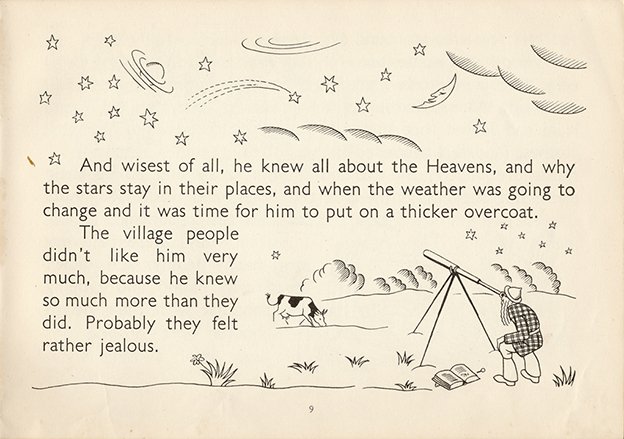
The flood story he tells has an eye-catching omission: no sign of God, anywhere. It’s still a moral tale: the wise man Noah calculates that a flood will come, builds an ark and saves his family, the farm animals and the forest animals. The villagers, who are ‘conceited, quarrelsome and lazy as a result of getting all they wanted without much effort’, mock his flood warning and refuse to leave, so they perish.

Noah and telescope

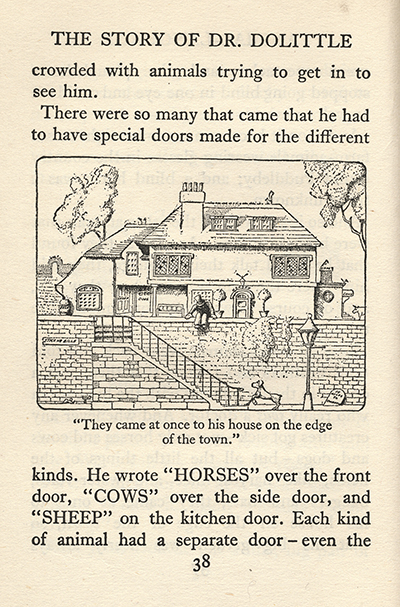
Noah has predicted a flood from his scientific observations, but the animals tip him off that it will be severe – he can talk to them, and they come to him with their troubles. This sounds familiar. Hugh Lofting’s The Story of Doctor Dolittle, the first of a series, appeared a decade before The Story of Noah. There are other similarities: Dolittle is a clever man who lives on the edge of the town, he likes animals better than the people, he learns animal language. A crowd of animals move in with him (in Lofting’s illustration his house even looks a bit like an overturned ark). After a message from a swallow he borrows a boat and they sail to Africa to save the monkeys from sickness.

Dr Dolittle

I don’t know if Webb was familiar with the Dr Dolittle books. Both writers were interested in natural history; both of them had fought and been wounded in the First World War. Lofting’s last book was a flood story published in 1948, with Dr Dolittle as a latter-day Noah. Perhaps, out of a similar post-catastrophe sensibility, both drew on a narrative archetype for their humanistic (if somewhat misanthropic) fables.

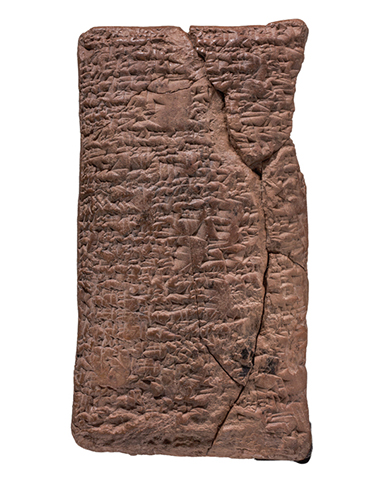
The flood story is much older than the Bible, older than writing even. Irving Finkel of the British Museum, who can read cuneiform, has just published The Ark before Noah: decoding the story of the Flood, in which he reveals to the rest of us, who can’t, a very early account which he discovered on an Akkadian cuneiform tablet. It includes detailed instructions for building the ark – a circular one. Studying the world’s oldest writing, Finkel says, ‘compels you to wonder about what writing is, how it came about more than five thousand years ago and what the world might have looked like without it … The conception that a graphic sign could could convey sound isolated from meaning is the Great Leap, for it meant that real and full writing could become possible.’ On the ubiquity of flood stories he writes: ‘the forces of nature, including rivers, rain and sea … are irresistible by man when they are roused and are likely to underpin much traditional narrative, while in any flood, however disastrous, certain individuals always survive, usually those with boats.’

The Ark Tablet
The Ark Tablet [image Douglas Simmonds/British Museum]